
Philippe Lazzarini
The claim that people in Gaza can move to "safe" or "humanitarian" areas is a false claim. And each time, it puts civilians' lives at grave risk.
UNRWA Commissioner-General – May 18, 2024.

Loading
As the cycle of displacement continues;
are there safe areas in Gaza?
As Israel continues to commit atrocities against civilians in the Gaza Strip, since the start of the conflict in October/November 2023, visually documenting these violations remains solid evidence toward ensuring accountability. Civilians in the Gaza Strip have been forced to flee attacks and targeting again and again since mid-October/November 2023.
Israel divided the area into numbered blocks in December 2023, continuing to issue evacuation and relocation orders as a pretext to evade responsibility for targeting civilians.
The most recent was the Israeli military's announcement of the start of its ground operations east of Rafah, in the south of the Strip, on May 6, 2024, calling on the displaced to move to the "safe zone." Rafah itself had, from the start of the events until the announcement of the incursion, been a safe area for displacement and a refuge for many civilians in Gaza — civilians whom the latest incursion forced to be displaced once again.
Looking back at the timeline of evacuation orders, the cycle of displacement from October 2023 to May 2024 can be summarized in three main waves. The first began on October 14, 2023, when the Israeli military issued an order calling on residents of the northern Strip to move south of Wadi Gaza.
As leaflets calling for evacuation from the north continued to be dropped and civilians moved south, new orders were issued on December 13, 2023, calling on residents of the Khan Younis area to move to the Tel al-Sultan, al-Zuhour, and al-Shabora areas, followed by the evacuation of some areas south of Wadi Gaza toward shelters in Deir al-Balah.
On May 6, 2024, after various waves of displacement, those displaced in the eastern area of Rafah were asked to be displaced once again toward the expanded humanitarian zone in al-Mawasi.
Satellite imagery showed the extent of the notable change in the displacement camps north of Rafah and the movement of tents in the Tel al-Sultan area, block 2371/24372, toward Khan Younis, after the Israeli military announced — via leaflets — that it was calling on the eastern neighborhoods of Rafah to temporarily evacuate the area of residents and move to the expanded humanitarian zone.
Even so, the Tel al-Sultan area was not among the zones designated for evacuation, yet it saw a major shift and change in the pattern of tent distribution nine days after the announcement of the Israeli military's new operations in Rafah.
By May 14, 2024, large parts of the city of Rafah had become a "ghost town." According to a UN report, around 450,000 residents of Gaza had been forcibly displaced from the far south under Israeli evacuation orders.
Parts of the agricultural land in the far south can also be seen bulldozed as a result of the incursion, in addition to the destruction of residential buildings there.
The declared humanitarian zone was not the ideal place for displacement, as it saw widespread destruction in the months that followed.
Al-Mawasi, for example — which holds the largest number of displacement camps — is a stretch of sandy agricultural land covering 14 square kilometers in Khan Younis, where people are left out in the open with few, if any, buildings or roads.
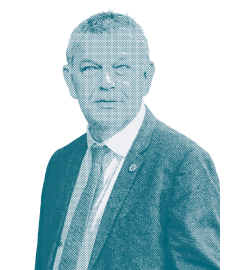
Philippe Lazzarini, UNRWA Commissioner-General, notes that al-Mawasi was home to more than 400,000 people — the area is overcrowded and cannot accommodate any more people, much like Deir al-Balah in the central areas.
Philippe Lazzarini
The claim that people in Gaza can move to "safe" or "humanitarian" areas is a false claim. And each time, it puts civilians' lives at grave risk.
UNRWA Commissioner-General – May 18, 2024.


From May 6–12, 2024, the estimated number
of people displaced from Rafah reached around 360,000.

From May 6–19, 2024, the estimated number
of people displaced from Rafah reached around 815,000.

From May 6–26, 2024, the estimated number of people displaced from Rafah reached around 945,000, with another 100,000 people displaced in northern Gaza. Most UNRWA shelters in Rafah were evacuated, with the displaced moving to Khan Younis and Deir al-Balah.

On May 24, 2024, Israeli aircraft bombed land near the camps in the Asda' area of al-Mawasi, Khan Younis, according to reports at the time, even though al-Mawasi is included in the so-called humanitarian zone declared as safe.
Satellite imagery showed the crater formed by the strike, along with another crater nearby. Both craters buried a number of tents, indicating that the attack consisted of two strikes on the same plot of land.
Frame-by-frame analysis of the attack video shows the shape of the munition used, which appears similar to Israeli SPICE munitions (the Israeli version of the JDAM family).
It also resembles Israel's own versions of the American MK 83, known as MPR, which likewise resembles the American Paveway II family.

It is not possible to confirm whether it is the American or Israeli version simply by its general shape; precise identification would require access to the munition's remnants or closer images of it.
Taking a wider view of the affected area, satellite imagery shows two additional strikes 300 meters from the strike that was documented and shared on social media.
Despite the area being designated a "safe" humanitarian zone, Israeli forces continue to carry out attacks, using the pretext of dropping warning leaflets before bombing to call on the displaced to flee once again.
Two days after the al-Mawasi attack, on the evening of May 26, 2024, Israeli forces bombed displacement camps in the Tel al-Sultan area, in a "gray zone" (neither an evacuation zone nor a humanitarian zone) in the city of Rafah. The attack left a large number of dead and wounded, with initial UNRWA reports indicating around 50 casualties among the displaced, as the strike hit the unofficial site adjacent to UNRWA's logistics base. The UN later estimated the death toll at 200 people.
According to a statement by the Israeli military spokesperson, the Israeli army used two munitions weighing 17 kg (37 lbs) each in the attack on the camp in Rafah.
We are talking about munition with 17 Kilos of explosive materiel
Daniel Hagari
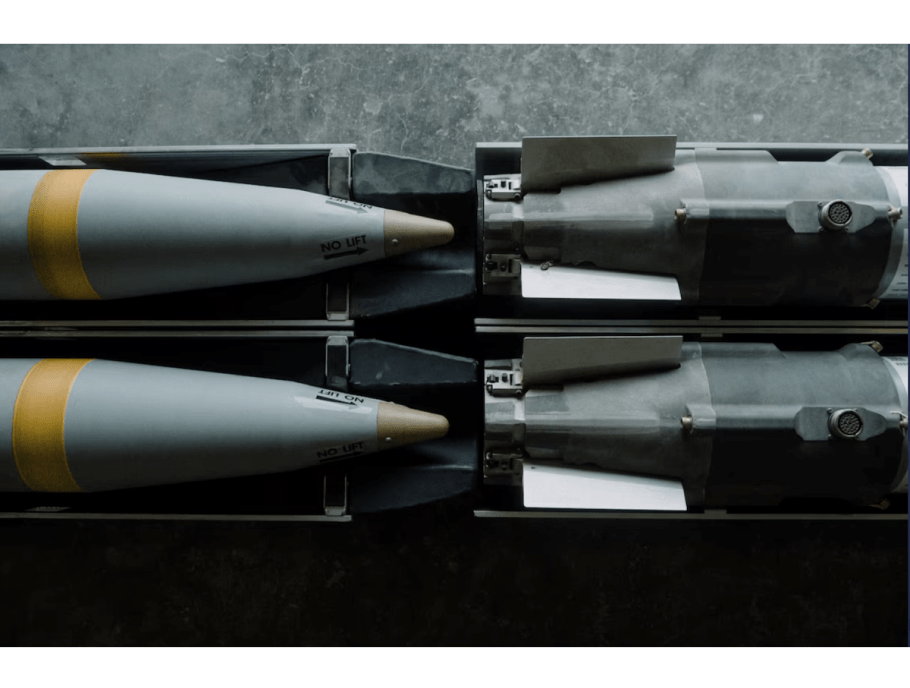
Remnants of the munition used in the attack appeared in a video posted by a user on Telegram, identified as belonging to an American SDB-GBU-39 bomb. The remnants belonged to the tail actuation system, which controls the fins that guide the bomb to its target — the use of two munitions weighing 17 kg (37 lbs) each in its attack on the camp in Rafah.
One important detail that appeared on one of the fragments was the number "81873", a unique identification code assigned to Woodward, an aerospace manufacturing company based in Colorado. It is worth noting that, as of 2023, Israel had received around 1,000 GBU-39 bombs from the United States, according to SIPRI arms transfer data.
81873


Israeli forces resumed bombing the tents of al-Mawasi, west of Rafah, on May 28, 2024. Dozens of displaced people were killed or wounded in the attack.
An interview with a survivor of the bombing of the al-Mawasi tents, speaking about the successive cycles of displacement that failed to protect them from death either.

The damage appeared in videos filmed after the incident, showing that some tents had collapsed, while others were damaged or torn apart by shrapnel from the munition.
The impact was clear in recent satellite imagery dated May 30, 2024 — a scorch mark and the burial of some tents can be observed.
Looking at satellite imagery from May 26, 2024, just two days before the attack, the site appears crowded with tents and displaced people. The area had been a refuge for many after the announcement of the Rafah incursion and the dropping of leaflets warning them to take shelter there.
But many of those tents can be seen to have disappeared after the attack; this image was taken on June 6, 2024.

The displaced in the Gaza Strip are still forced every day to move to areas declared safe, only to find themselves, time and again, bombed in the very tents where they have sought refuge. The cycle of displacement had not stopped as of the writing of this investigation, nor had the successive attacks on camps and the displaced. UNRWA reported that, as of May 27, at least 36,050 Palestinians had been killed in the Gaza Strip since October 7, 2023, in addition to 81,026 others wounded.

Calls continue for a ceasefire, the need to restore normal life, the protection of civilians, and holding all perpetrators of these crimes accountable.
This investigation is one of several open-source investigations produced by the Nawa Media team in response to covering the war in Gaza.
Given the rapidly escalating violence, the figures are a historical record for that point in time, not a reflection of the current reality.
Through these investigations, we aim to contribute to the body of evidence on war crimes and crimes against humanity in the Gaza Strip. For this reason, the authors of these investigations use precise and careful language that helps support the prosecution of those responsible for these crimes in international courts.
Written by: Zahra Al-Qudsi
Technical support: Hussein Khalil
Visual production: Bayan Othman
Editorial supervision: Abdul Rahman Jaloud
Copy editing: Zahraa Dairani